OLYMPIC
TENNIS CENTER
VILLEMADRID
SPAIN, 2009
SPORT
PR–380
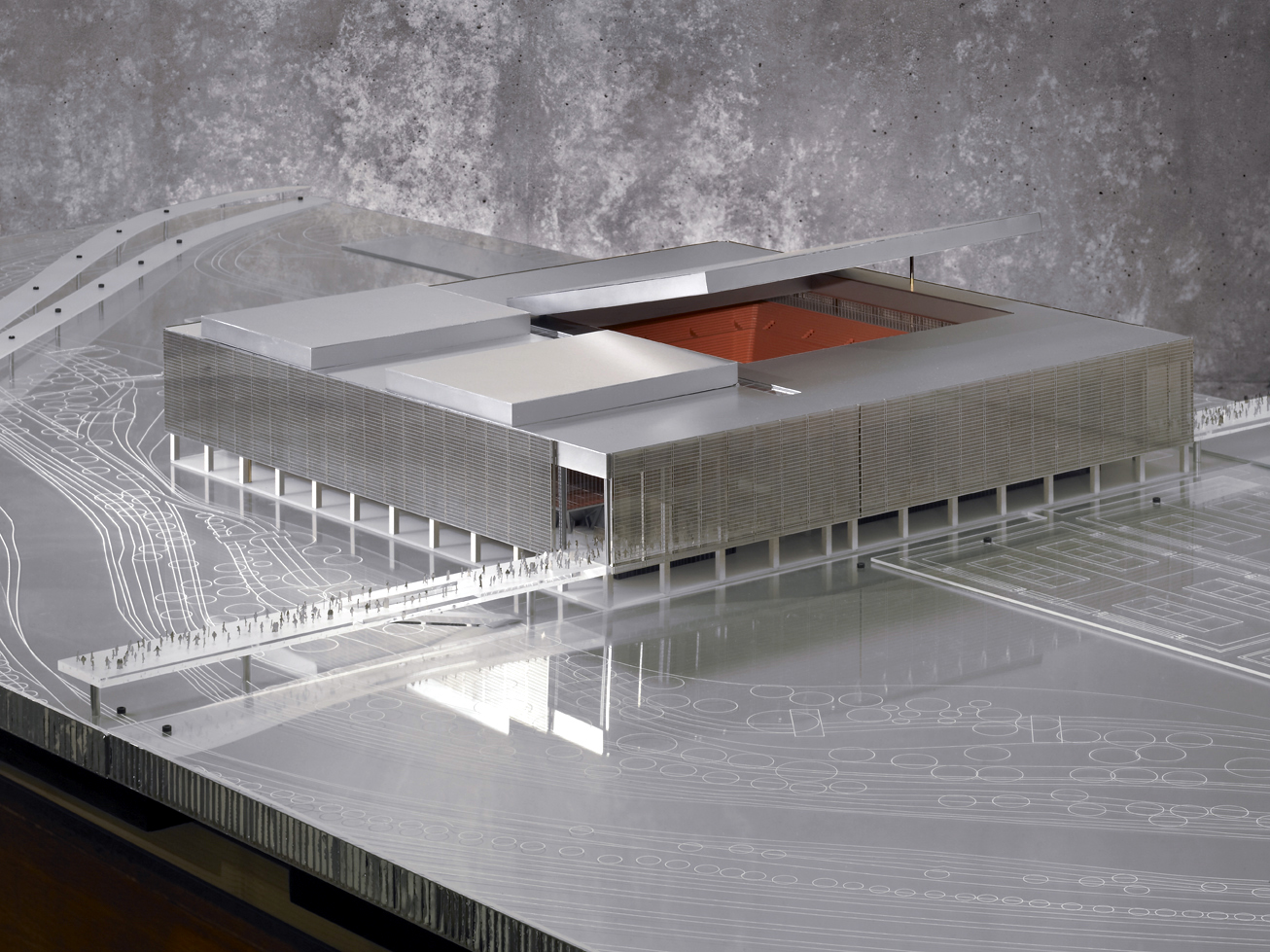
Designed with the 2016 Olympic Games in mind, the Caja Mágica Olympic Tennis Centre owes its name to the magic of sports fields, places of duels, triumphs, and jubilation. Like the boxes in our childhood fairy tales, its retractable roof opens and closes, ready to protect the athletes or expose them to the light. At night, the interplay of lights renders the metal invisible to the outside world.
GALLERY
047
001

002

003

004

005

006

007

008

009

010

011

012

013

014

015

016

017

018

019

020

021

022

023

024

025

026

027

028

029

030

031

032

033

034

035

036

037

038

039

040

041

042

043

044

045

047
VIDEOS
006
001 Simulation
002 Simulation
003 Simulation
004 Presentation video
005 Simulation
006 Simulation
PROGRAM
The Caja Mágica is spread over an area of 16.5 hectares, between the motorway and the wasteland of the railway network. It includes the “magic box” and its three courts with a total capacity of 20,000 spectators, 16 outdoor courts, 5 indoor courts and 6 practice courts, a swimming pool, the headquarters of the Spanish Tennis Federation, a tennis school, a clubhouse, a press center and restaurants.
DETAIL
Situation
Camino de Perales, 23, Usera, Madrid, Spain
Year
2002–2009
Status
International competition, winning project
Site area
16,5 ha
Built surface
100 000 m²
Client
Madrid Espacios y Congresos, Madrid
Architect
Dominique Perrault Architecte
Engineering office
TYPSA, LKS, Jean-Paul Lamoureux
Interior designer and design
Gaëlle Lauriot-Prévost
DESCRIPTION
The buildings, constructed of metal, aluminum, concrete, and glass, overlook a vast artificial lake. A system of walkways offers a variety of routes and connects the center to the San Fermin district and the Manzanares Park, designed by Ricardo Bofill. The roofs of the main courts, mounted on hydraulic jacks, allow for three configurations—indoor, outdoor, and semi-open—which can be adjusted to 27 different positions.
READ MORE
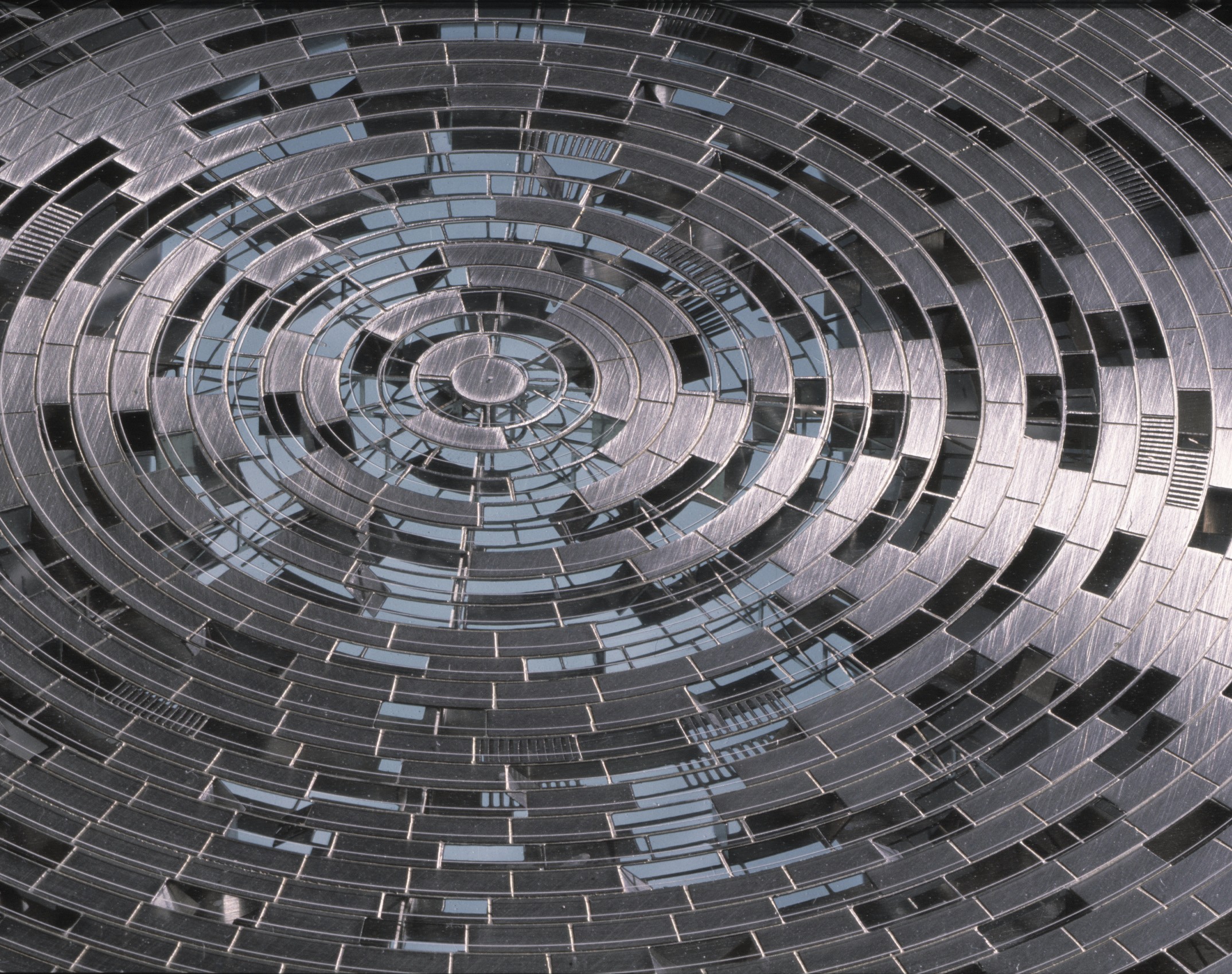
This “magic box,” which opens and closes as needed, adapts to all types of events. Like a garment, its metallic mesh skin filters the sun, softens the wind, and lightly protects sports halls. The cover, a veritable sunscreen—a kind of urban headdress—unifies the urban fabric.
The spiral mesh envelops and shelters walkways from rain and sun, while still allowing air to circulate. Thanks to the mesh’s transparency, the city, its rhythm, and its bustle remain visible.
The city, because the mesh spiral is high enough (25 meters!) to offer a view of the city through it. Time, because the factory was brought on-site to manufacture the spiral. And finally, the bustle, because the mesh forms large banners on the ceiling, harmonizing and leveling the volumes of this elevated space. The panels create an illusion of horizontality, without compromising the height.
RELATED PROJECTS
OLYMPIC VELOPARK
PR–340
Sport
London
SKI JUMPING HILL, INNSBRUCK
PR–142
Sport
Innsbruck

CIUDAD DEL MOTOR
PR–345
Sport
Alcañiz
OLYMPIC ICE RINK
PR–519
Sport
Beijing
ARENA
PR–453
Sport
Zürich
GRAND STADIUM
PR–067
Sport
Melun-Sénart
PARISLONGCHAMP HIPPODROME
PR–556
Sport
Paris
EXTENSION OF THE OLYMPIC TENNIS CENTER
PR–662
Sport
Madrid
VELODROME AND OLYMPIC SWIMMING POOL
PR–140
Sport
Berlin
OLYMPIC SWIMMING POOL
PR–234
Sport
Beijing
LONDON 2012 OLYMPIC SWIMMING POOL
PR–252
Sport
London
SKI JUMPING HILL, COURCHEVEL
PR–031
Sport
Courchevel
24H DU MANS GRANDSTAND
PR–584
Sport
Le Mans
SUZANNE LENGLEN COURT COVER
PR–645
Sport
Paris
KINDARENA – SPORTS ARENA
PR–439
Sport
Rouen