EXTENSION OF THE
OLYMPIC TENNIS CENTER
MADRID
SPAIN, 2026-2030
SPORT
PR–662
With its circular shape and exposed metal structure, the new extension of the tennis stadium asserts a strong identity while establishing a complementary dialogue with the existing architecture of the Caja Mágica.
GALLERY
015


VIDEOS
006
001 Roof simulation
002 Presentation video
003 Global simulation
004 Roof simulation
005 Interior simulation
006 Interior simulation
PROGRAM
A semi-permanent extension to the Olympic Tennis Centre, designed by the agency between 2009 and 2022, allowing it to accommodate approximately 8,500 spectators during ATP and WTA tournaments. The project includes all the facilities necessary for the event’s operation: players’ changing rooms, a gymnasium, rest areas, press rooms, storage areas, catering outlets, as well as spaces dedicated to partners and sponsors.
DETAIL
Situation
Parque del Manzanares, Madrid, Spain
Year
2025–2030
Status
Direct order under copyright law
Site area
8 700 m²
Built surface
17 050 m²
Client
Madrid Destino – Cultura Turismo y Negocio S.A., Madrid
Architect
Dominique Perrault Architecte
Engineering office
TYPSA, Jean-Paul Lamoureux
DESCRIPTION
In order to assert its identity while engaging with the existing structure, the new stadium adopts a circular shape, contrasting with the rectangular geometry of the existing building. The two facilities thus form a coherent whole of opposing but complementary forms, united by a common architectural language: metal.
READ MORE
This circular geometry responds both to the site constraints—a triangular plot located between the axis of the Caja Mágica, the Tennis Garden, and the Manzanares River—and to the experience of sporting events. Inspired by the classical typology of performance spaces, it fosters a direct relationship between the audience and the game, eliminating blind spots and enhancing visual intensity and spectator immersion.
The construction system is based on a repetitive modular structure, organized into homogeneous sectors that integrate the functions necessary for the stadium’s operation. This modularity facilitates assembly, dismantling, and cost optimization, thus meeting the requirements of a semi-permanent infrastructure.
Finally, the project introduces a new public axis that structures access to the stadium and extends the central axis of the Caja Mágica northward, reinforcing urban continuity and the integration of the new stadium into the landscape of the sports complex.
RELATED PROJECTS
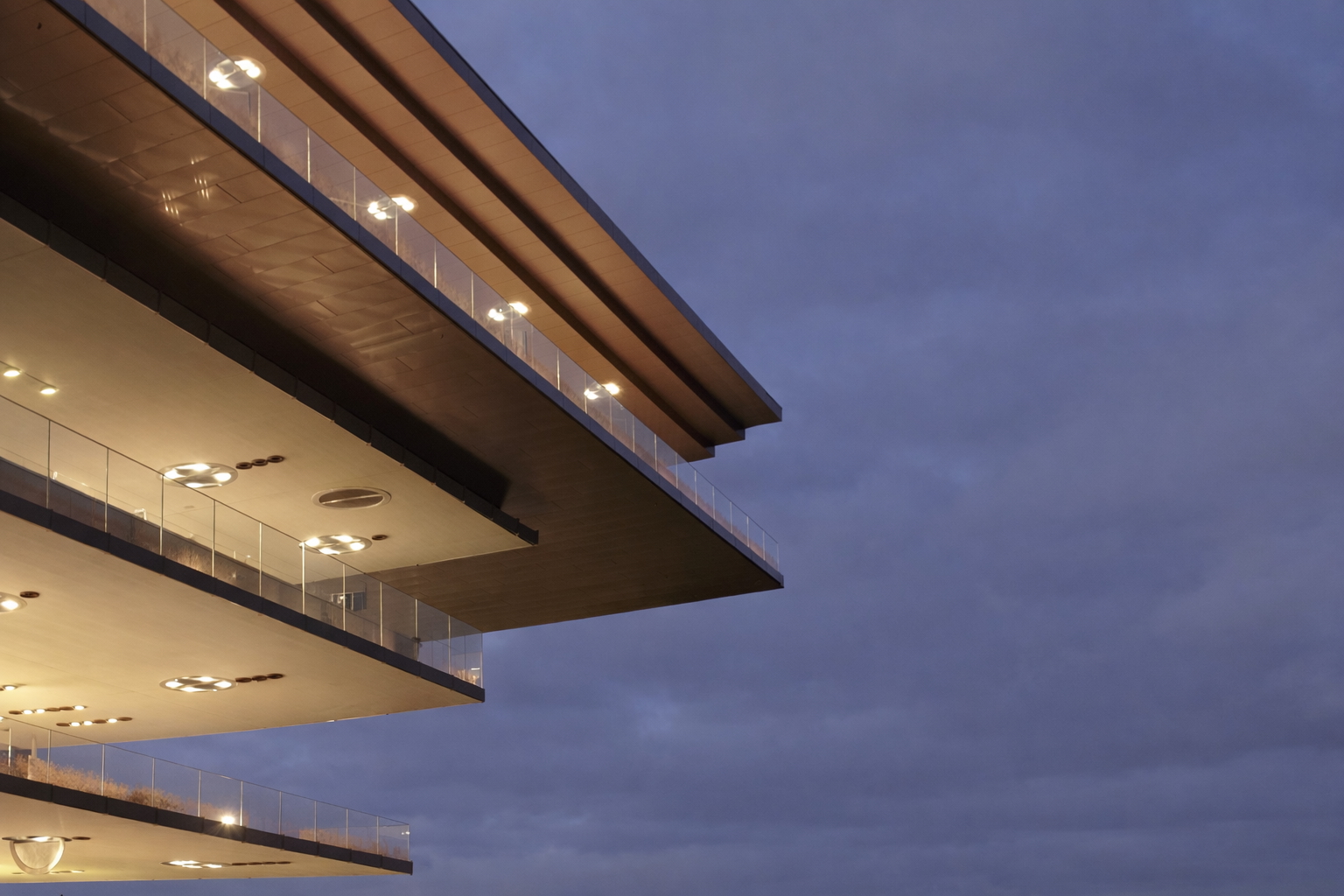
PARISLONGCHAMP HIPPODROME
PR-556
Sport
Paris
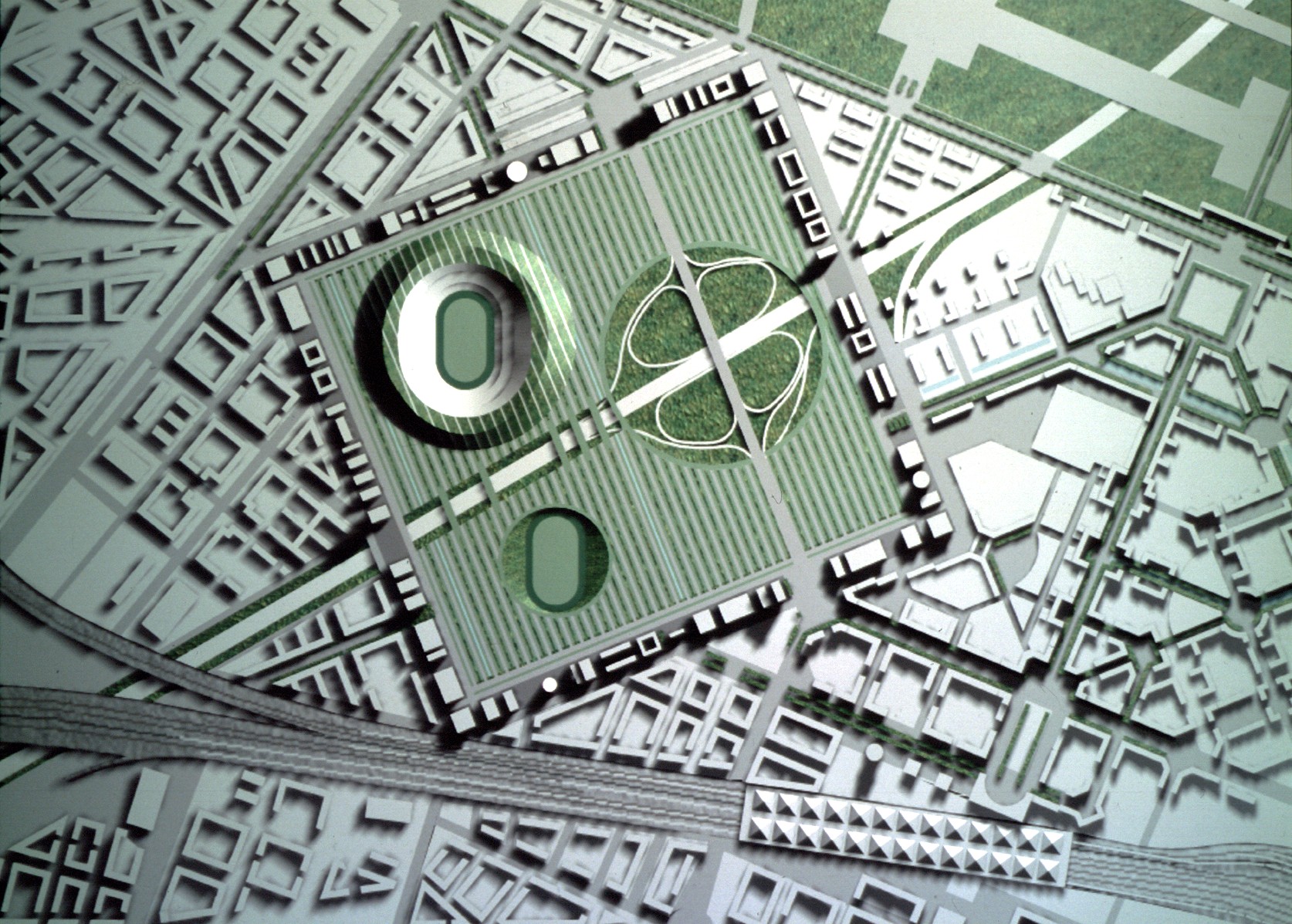
GRAND STADIUM
PR-067
Sport
Melun-Sénart
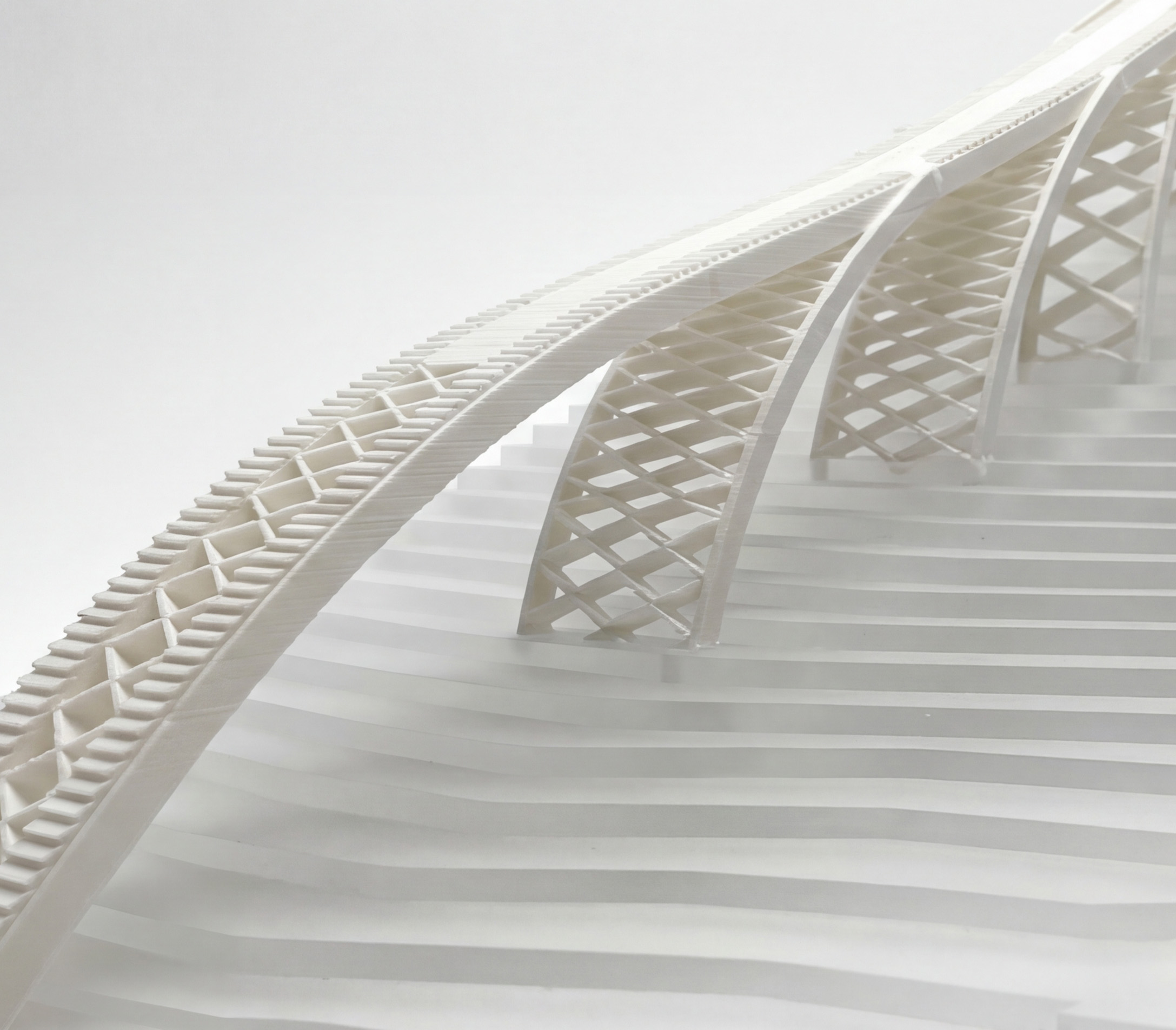
SKI JUMPING HILL, COURCHEVEL
PR–031
Sport
Courchevel
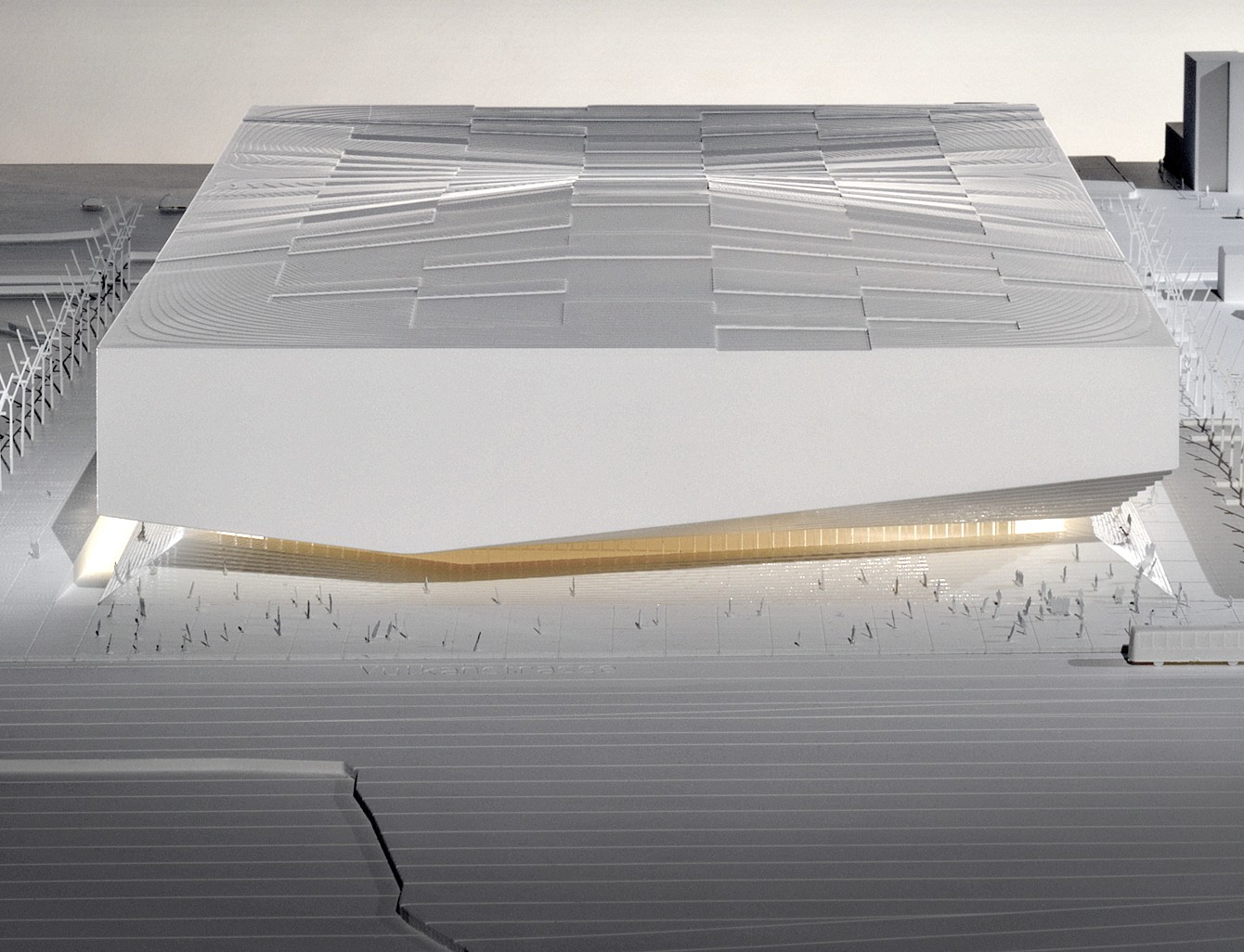
ARENA
PR–453
Sport
Zürich
SUZANNE LENGLEN COURT COVER
PR 645
Sport
Paris
GROUNDSCAPES DESIGN LAB – RETHINKING CITIES UNDERGROUND
RE-002
Research
GRANES ÉCURIES
PR 546
Heritage
Chantilly
PARIS 2024 OLYMPICS AND PARALYMPICS GAMES – ATHLETES VILLAGE MANUAL OF URBAN DESIGN
RE-006
Research
Saint-Denis
CIUDAD DEL MOTOR
PR–345
Sport
Alcañiz
OLYMPIC VELOPARK
PR-340
Sport
London
OLYMPIC ICE RINK
PR-519
Sport
Beijing
VELODROME AND OLYMPIC SWIMMING POOL
PR 140
Sport
Berlin
SKI JUMPING HILL, INNSBRUCK
PR–142
Sport
Innsbruck
KINDARENA – SPORTS ARENA
PR 439
Sport
Rouen
